In, On or At? Prepositions with Dates and Times
In for months and years, on for days, at for clock times. The simple rule, the phrases that break it, and why "at ten" and "in ten" are different trains.
"In June 2026 or on June 2026?" "At the weekend or on the weekend?" English uses three small words — in, on and at — in front of dates and times, and choosing the wrong one is one of the most common learner mistakes. The good news is that the rule is simple once you see it as a question of size.
The rule: big, medium, small
Think of time as three sizes. Long periods take in, single days take on, and exact points take at.
| Word | Used with | Examples |
|---|---|---|
| in | months, years, seasons, decades, parts of the day | in June, in 2026, in June 2026, in winter, in the 1990s, in the morning |
| on | days and dates | on Monday, on 5 June, on June 5th, on my birthday, on Christmas Day, on Friday night |
| at | clock times and exact points | at 3pm, at half past six, at noon, at midnight, at night, at the end of the month |
In June 2026, not on June 2026
A month is a long period, so it takes "in" — and adding the year does not change that. "In June 2026" is correct; "on June 2026" is wrong. "On" only appears once a specific day is named: "on 5 June 2026" or "on June 5, 2026".
While we are here: there is no comma between a month and a year. Write "June 2026", not "June, 2026". The comma belongs only in the American full date, between the day and the year — "June 5, 2026".
Where the rule bends
A few fixed phrases break the pattern and simply have to be learned:
- at night, but in the morning, the afternoon and the evening.
- on Monday morning, on Friday night — once a day is named, "on" wins over "in".
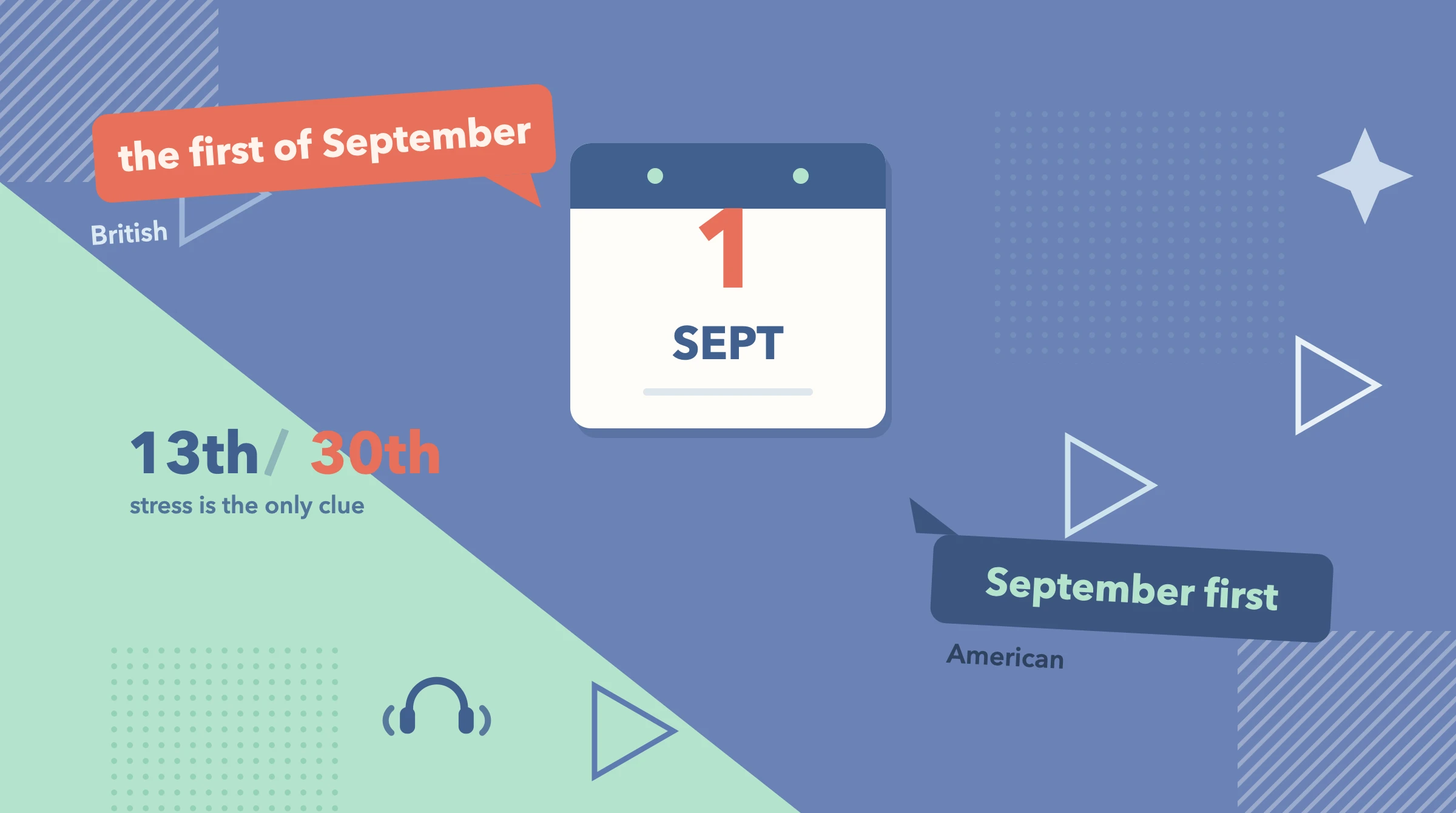
- at the weekend is British; on the weekend is American. Both are correct in their own country.
- at Christmas means the holiday period; on Christmas Day means the day itself.
- at the moment, at the same time, at the start — "at" for single points in a sequence.
When there is no preposition at all
Drop in, on and at completely before this, next, last and every, and before today, tomorrow and yesterday:
- "See you next Friday" — not "on next Friday"
- "We met last June" — not "in last June"
- "I run every morning" — not "in every morning"
- "The parcel arrives tomorrow" — not "on tomorrow"
Why it matters for listening
These words are short and unstressed, so in fast speech they shrink to almost nothing. But they change the meaning of the number that follows, and missing them is how people end up at the wrong place at the wrong time:
| You hear | It means |
|---|---|
| "The bus leaves at ten." | 10:00 on the clock |
| "The bus leaves in ten." | Ten minutes from now |
| "It's due on the fifth." | The 5th day of the month |
| "It's due in five days." | Five days from today |
| "Send it by Friday." | Friday or earlier |
"In" followed by a number usually means time from now, not a time on the clock. "At" means the clock. If you only catch the number, you have only half the information.
Putting it together
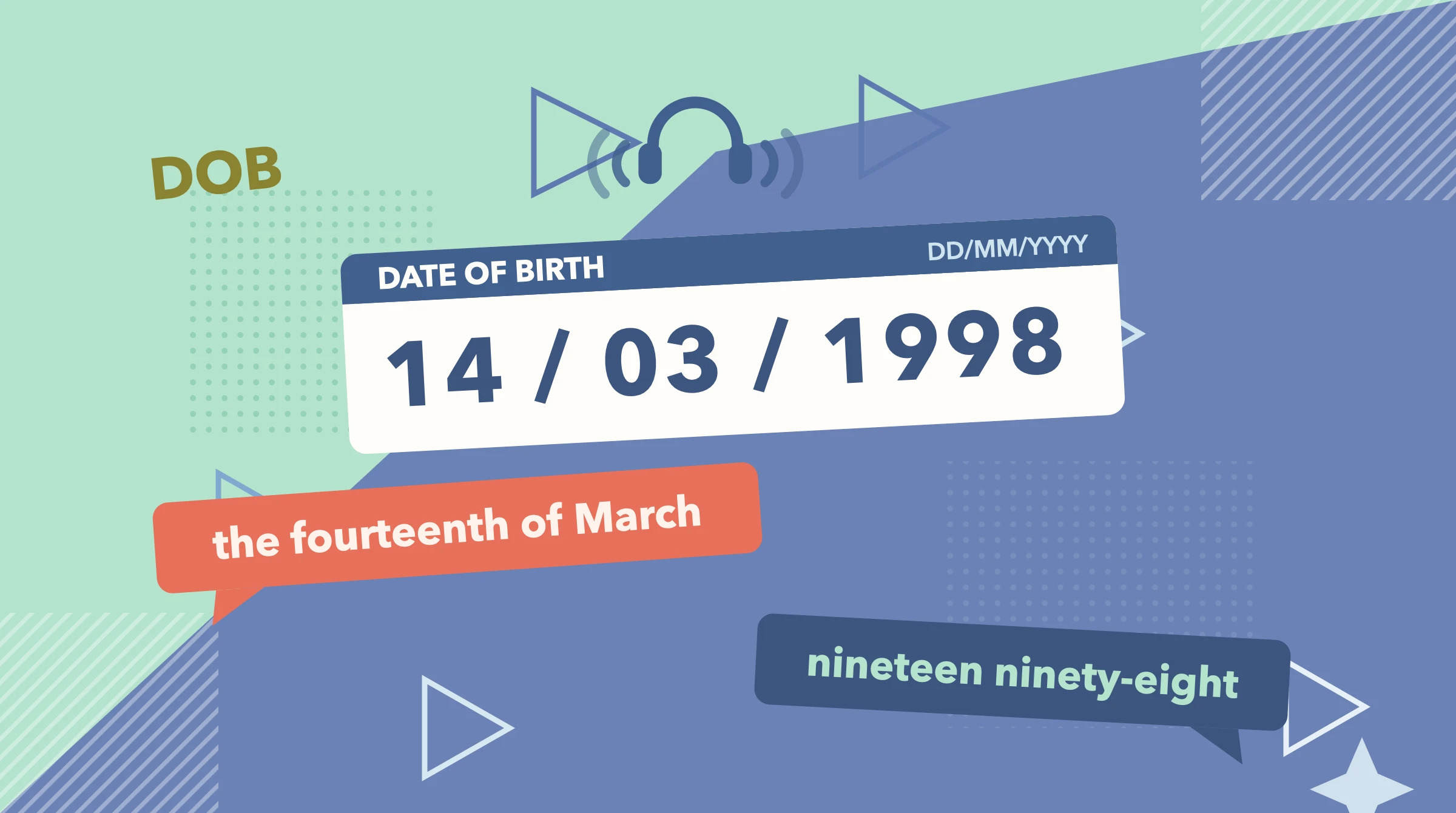
A full sentence can use all three: "The interview is at 2:30 on Thursday the twelfth, in March." Small, then medium, then big. The same order works for your birthday — "I was born on the fourteenth of March" — covered in how to say your date of birth. For how the date itself is spoken, see how to say dates out loud, and for the year that often follows, how to say years in English.
Practise with real speech
The grammar takes an afternoon to learn. Hearing "at ten" and "in ten" correctly at normal speed takes practice with real audio. The time test on Numblr plays times in natural spoken English — "quarter to five", "half past nine", "ten fifteen" — and you type what you hear. If numbers in general still slow you down, start with an introduction to English numbers.