How to Say and Write Your Date of Birth in English
The one date you will be asked for on every form and at every desk. How to say it, how to write it, and how to hear it read back without mistakes.
Your date of birth is the one date you will be asked for again and again in English — on forms, at a bank, at a doctor's reception, in a visa interview, and in the first minutes of an IELTS speaking test. It is also a date you have to both say clearly and catch when someone reads it back to you. This guide covers both: how to write it, how to say it, and how to hear it.
How to say your date of birth
Say it the same way you would say any date, with the year at the end. Take someone born on 14 March 1998:
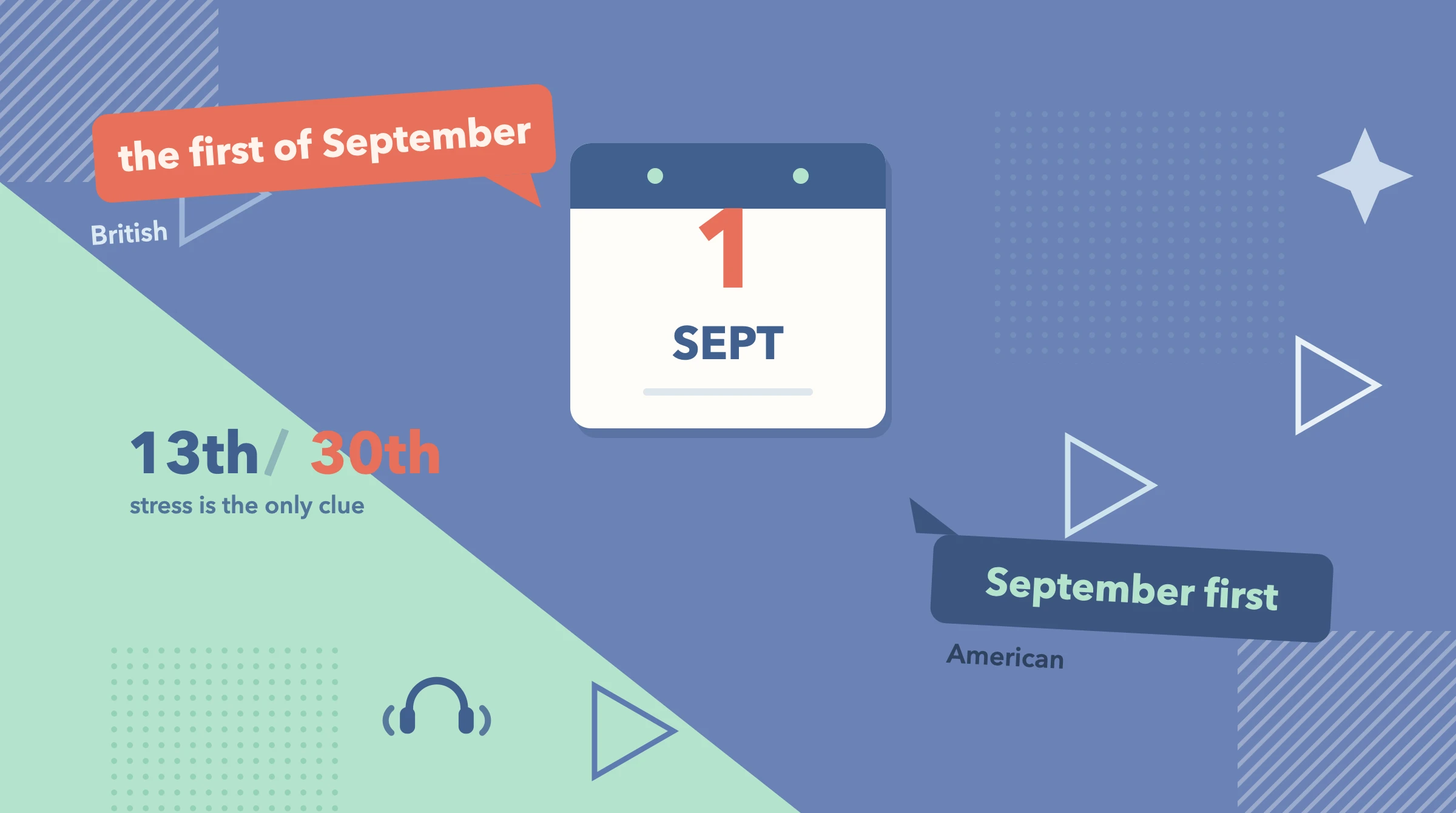
- British: "the fourteenth of March, nineteen ninety-eight"
- American: "March fourteenth, nineteen ninety-eight"
Three details matter. The day is an ordinal — "fourteenth", not "fourteen". The month is said by name, never as a number. And the year is split into two pairs: "nineteen ninety-eight", not "one thousand nine hundred and ninety-eight". For years from 2000 onwards, both "two thousand and five" and "twenty oh-five" are heard, with the first far more common — how to say years in English covers every case.
The question you will actually be asked
People rarely say "date of birth" out loud in full. Listen for these:
- "What's your date of birth?"
- "Can I take your date of birth?"
- "And your DOB?" — said as "dee-oh-bee"
- "When were you born?"
- "When's your birthday?" — this one wants only the day and month
A full answer is fine: "It's the fourteenth of March, nineteen ninety-eight." You can also say "I was born on the fourteenth of March, nineteen ninety-eight". Use "on" for the full date and "in" if you only give the month or year — "I was born in March", "I was born in 1998". The full set of rules is in in, on or at with dates and times.
How to write it on a form
Written forms are where people get it wrong, because the order of day and month depends on the country. The same birthday looks like this:
| Form asks for | You write | Used in |
|---|---|---|
| DD/MM/YYYY | 14/03/1998 | UK, Australia, most of the world |
| MM/DD/YYYY | 03/14/1998 | United States |
| YYYY-MM-DD | 1998-03-14 | Online systems, international forms |
| Written in full | 14 March 1998 / March 14, 1998 | Letters, CVs, formal documents |
Always read the little letters on the form. If there are none and the form is American, assume month first. If you are unsure, write the month as a word — 14 March 1998 cannot be misread by anyone.
On a CV or job application in the UK or US, you usually do not need to include your date of birth at all. Many employers avoid asking for it, to stay clear of age discrimination.
Hearing it read back to you
The harder half is listening. A receptionist checking your details will read your date of birth back quickly, often as digits: "zero three, one four, nine eight" or "fourteen, oh three, ninety-eight". You need to catch whether they have the day and month the right way round — and whether they said fourteen or forty.
The spots where it most often goes wrong:
- 13th / 30th and 14th / 40th. Only the stress separates them: thir-TEENTH vs THIR-tieth. A birthday on the 13th misheard as the 30th is a different day.
- "Oh" for zero. "Oh three" is 03, March. Some speakers say "zero three", others just "three".
- Swapped order. If a British speaker reads your American form, or the other way round, 03/04 becomes April instead of March. Listen for the month name if they give one.
- Two-digit years. "Ninety-eight" means 1998, but "oh eight" could be 2008. Confirm the century if it matters.
If you are not sure, it is normal and polite to check: "Sorry, was that the thirteenth or the thirtieth?"
In the IELTS speaking and listening tests
The IELTS speaking test starts with basic questions about you, and in the listening test, Section 1 is often a form-filling conversation — booking, registering, signing up — where a date of birth is one of the answers. Spelling the month wrong or writing 30 for 13 loses the mark. The IELTS guide to listening for numbers covers the other number traps in that section.
Practise until it is automatic
Saying your own date of birth becomes easy after a few tries. Catching someone else's at speed takes more practice, because the "-teen" or "-ty" decision has to happen faster than you can think about it. Short dictation drills work best: hear a date, type it, check it. How to say dates out loud explains the full set of spoken forms, and the date test on Numblr drills them with British and American speakers mixed.