February 1st or 1st February? How Ordinal Dates Work in English
Should you write "February 1st" or "1st February"? Learn the difference between American and British date order, when to use ordinal numbers, and how to say dates aloud.
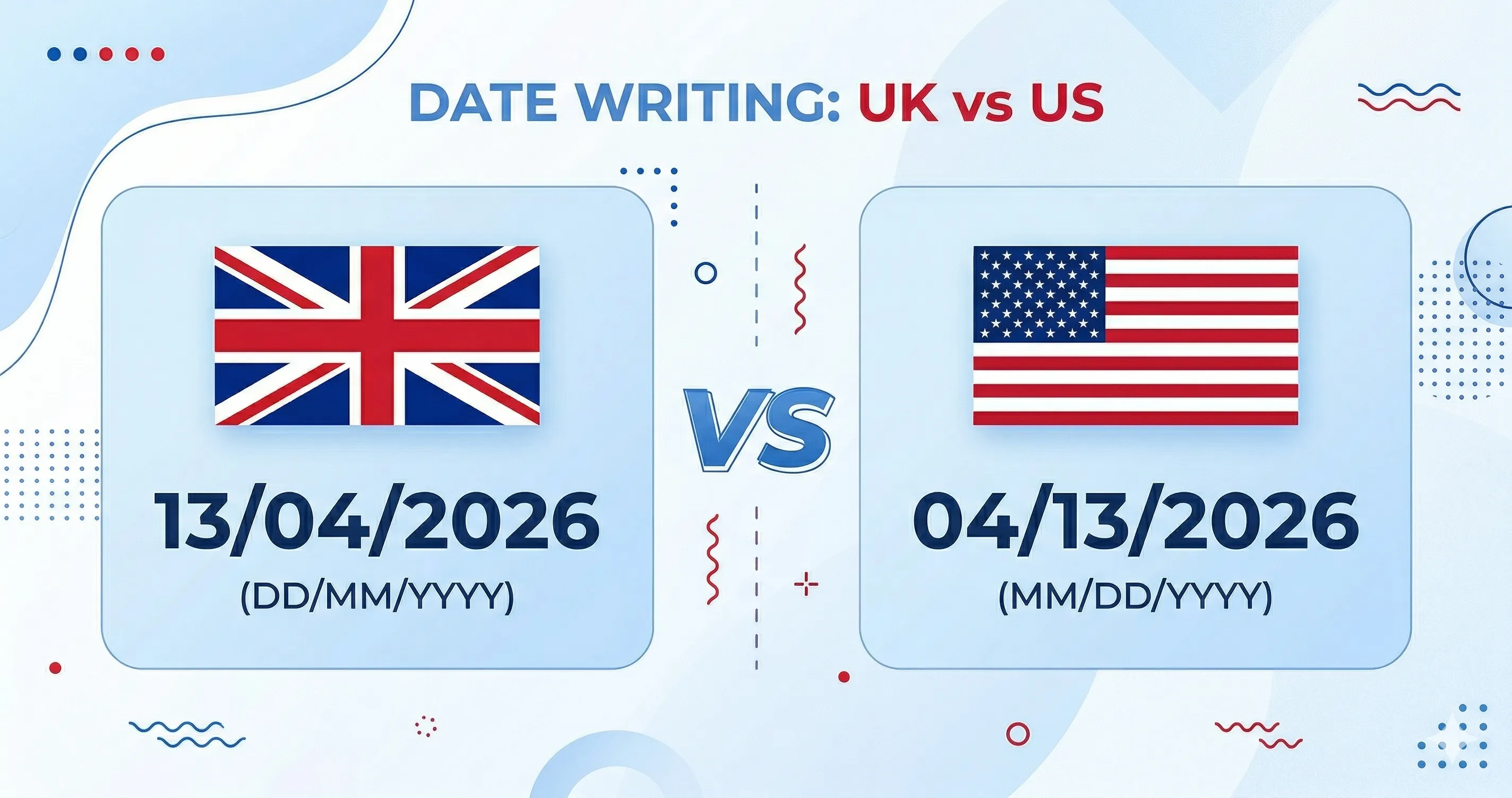
Should you write "February 1st" or "1st February"? This is one of the most common date formatting questions in English — and the answer depends on which type of English you're using. In this guide, we'll clear up the confusion once and for all.
The Short Answer
Both "February 1st" and "1st February" are correct. The difference is regional: American English puts the month first (February 1st), while British English puts the day first (1st February).
- American English: February 1st (month before day)
- British English: 1st February (day before month)
Neither is "wrong" — they're just conventions used in different parts of the world. Use the format that matches your audience.
American English: Month First
In the United States, the standard order is month–day–year. This applies to both written and spoken English:
- February 1st, 2026
- February 1, 2026 (without the ordinal suffix — more formal)
- March 15th
- December 25, 2026
When speaking, Americans typically say "February first" or "March fifteenth" — month name followed by the ordinal number.
British English: Day First
In the United Kingdom, Australia, and most of the world, the standard order is day–month–year:
- 1st February 2026
- 1 February 2026 (without the ordinal suffix — more formal)
- 15th March
- 25 December 2026
When speaking, British English speakers typically say "the first of February" or "the fifteenth of March" — using "the" and "of."
Should You Use the Ordinal Suffix (1st, 2nd, 3rd)?
The ordinal suffixes — st, nd, rd, th — are optional in written dates. Modern style guides increasingly recommend dropping them:
| Style | American | British |
|---|---|---|
| With ordinal | February 1st | 1st February |
| Without ordinal (preferred in formal writing) | February 1 | 1 February |
Key point: While the ordinal suffix is optional in writing, it's always used when speaking dates aloud. You would never say "February one" — it's always "February first."
Other Months: The Same Rule Applies
The same month-first vs day-first pattern applies to every month:
| American English | British English |
|---|---|
| January 1st | 1st January |
| February 14th | 14th February |
| March 3rd | 3rd March |
| April 1st | 1st April |
| May 5th | 5th May |
| June 21st | 21st June |
| July 4th | 4th July |
| August 15th | 15th August |
| September 1st | 1st September |
| October 31st | 31st October |
| November 11th | 11th November |
| December 25th | 25th December |
How to Say Dates Aloud
The way you say a date differs between American and British English:
| Written | American spoken | British spoken |
|---|---|---|
| Feb 1 | "February first" | "The first of February" |
| Apr 15 | "April fifteenth" | "The fifteenth of April" |
| Dec 25 | "December twenty-fifth" | "The twenty-fifth of December" |
Which Should You Use?
Follow these guidelines:
- Writing for an American audience: Use "February 1" or "February 1st"
- Writing for a British audience: Use "1 February" or "1st February"
- International audience: Either is fine, but be consistent throughout your document
- Formal writing: Drop the ordinal suffix regardless of which convention you use
For a complete guide to all date formats, including numeric dates, punctuation rules, and formal writing conventions, see our comprehensive guide to writing dates in English.
How This Sounds in Spoken English
The written difference between "February 1st" and "1st February" also affects how you hear these dates in conversation. In American English, you will hear "February first" — the month name comes first, making it easier to identify. In British English, you will hear "the first of February" — the day number comes first, which can be harder to catch because you need to wait for the month name.
This listening challenge gets harder with less common dates. For example, "the twenty-third of November" requires you to hold the number in memory while waiting for the month. Practicing with audio exercises can help you build this skill — our date listening practice guide covers exactly these spoken patterns, in both American and British English.