Date Listening Practice in English
Train your ear on dates spoken at natural speed — British, American, ordinals and years — so you never double-book yourself by mishearing.
Dates in spoken English hide a lot of complexity. British and American speakers flip the order of day and month. Ordinals ("the twenty-third") sound nothing like the digits you'd write. Years can be said four different ways. Miss a date in a meeting or a booking and you reschedule for the wrong day. This page is focused listening practice so you can catch dates the first time you hear them.
Why dates are harder than they look
You cannot fall back on context: "the fourteenth" and "the fortieth" sound almost identical in fast speech, and they are completely different dates. The main challenges:
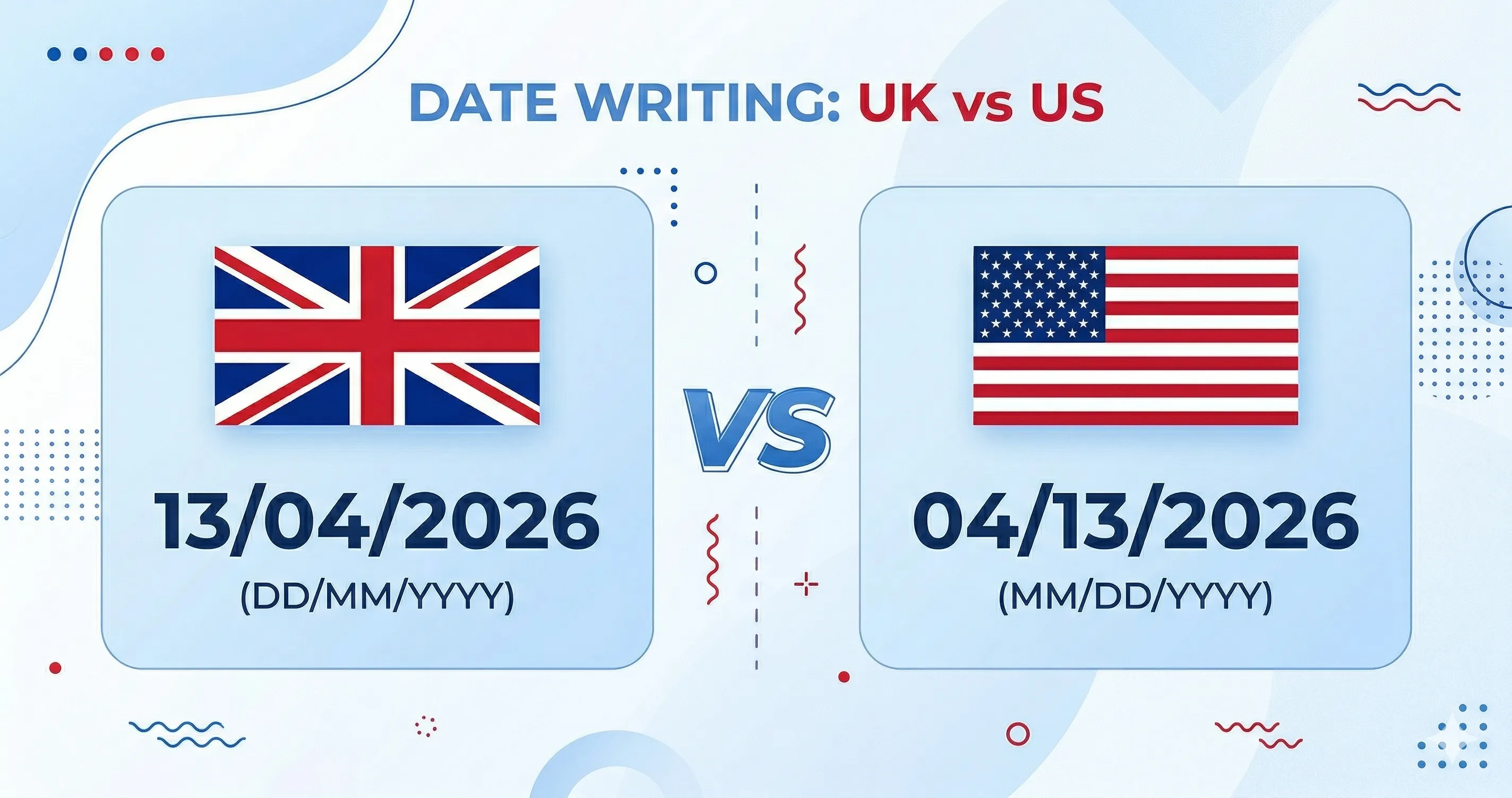
- Day–month vs month–day order. British English says "the 3rd of July"; American English says "July 3rd". When you're listening, you have to hold the first element in memory until you hear which it is.
- Ordinal endings. "Third", "fourth", "twentieth", "thirty-first" — you hear "-rd / -th / -st" endings, not digits. You have to convert in real time.
- Years spoken multiple ways. 2026 can be "two thousand and twenty-six", "twenty twenty-six", or even (rarely) "two thousand twenty-six". 1998 is "nineteen ninety-eight" — two chunks.
- Relative dates. "A week on Tuesday" or "the Friday after next" slide in mid-sentence and require you to track the reference point.
What Numblr trains specifically for dates
- Both British and American formats. The voice randomly alternates, so you train the "which order is this" reflex, not just one pattern.
- Full ordinal drills. 1st through 31st, spoken naturally, with the tricky pairs (13th/30th, 14th/40th) mixed in.
- Year formats. Years from 1900s and 2000s in all common spoken variants, so you don't lock onto one pattern.
- Mistake tracking. The specific date patterns you miss come back to you later — the dates you got wrong on Monday appear again on Thursday until you stop missing them.
Common date patterns to drill
| Pattern | Example | Spoken as |
|---|---|---|
| British full date | 3 July 2026 | "the third of July, twenty twenty-six" |
| American full date | July 3, 2026 | "July third, twenty twenty-six" |
| Month + ordinal only | 23 April | "the twenty-third of April" / "April twenty-third" |
| Year as hundreds | 1998 | "nineteen ninety-eight" |
| Year as thousands | 2026 | "two thousand and twenty-six" / "twenty twenty-six" |
| Decade reference | the 1970s | "the nineteen seventies" / "the seventies" |
Tips for real-life date catching
- Note the day name if given. If someone says "next Friday the 23rd", the day name is a free sanity check — write both and you can resolve ambiguity later.
- Confirm in the format you want. When taking a booking, read it back using unambiguous format: "so that's the 23rd of April, Tuesday". The speaker will correct you if you got it wrong.
- Practise ordinals separately first. If "thirteenth" vs "thirtieth" trips you up, isolate that drill for a week before full date practice.
- Short daily sessions. 5 minutes a day for two weeks is more effective than a long session once a week.