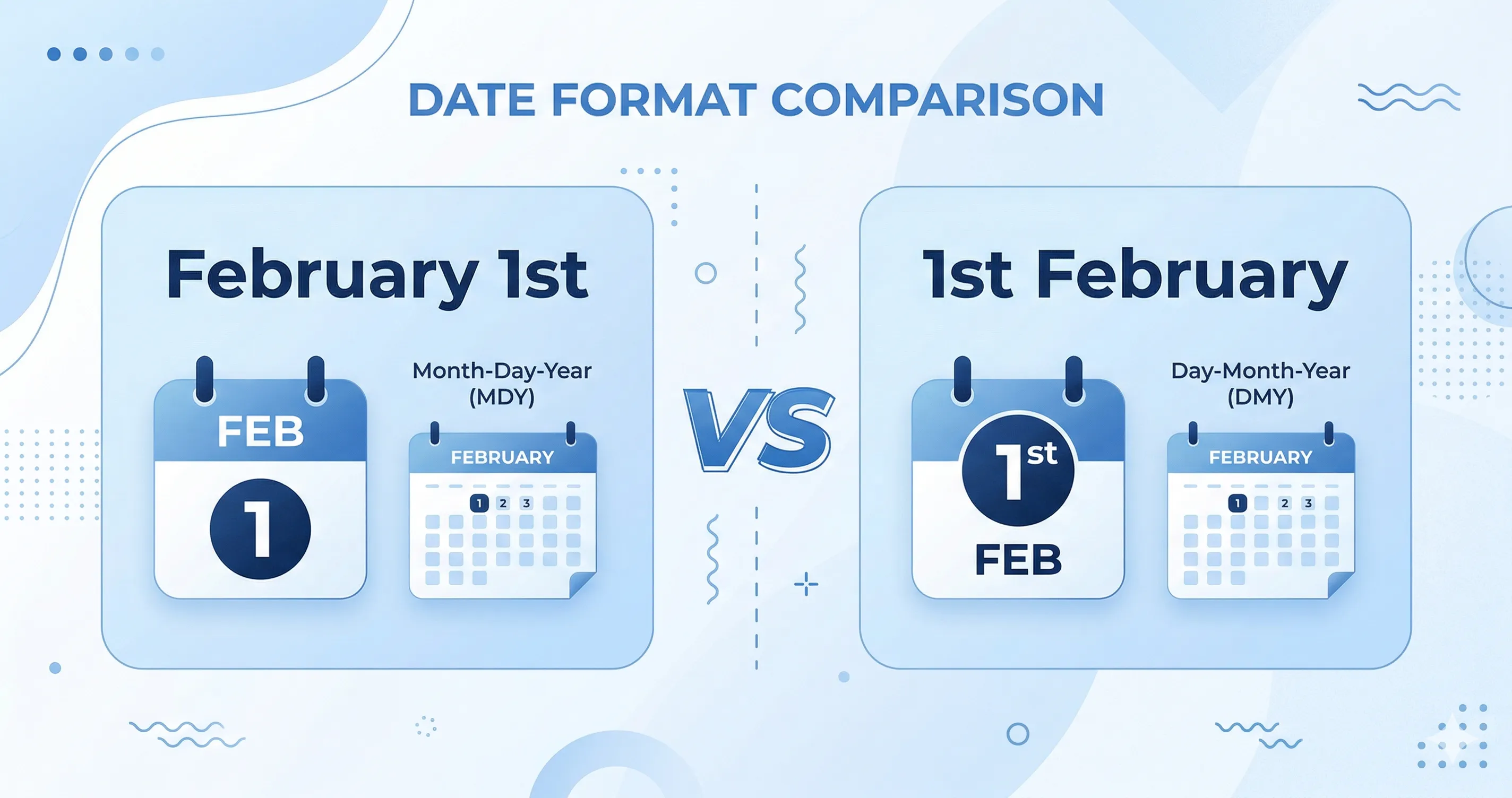
Commas in Dates: When and How to Punctuate Dates Correctly
Learn the comma rules for dates in American and British English. Covers commas between day and year, after the year in sentences, with day names, and month-year only.
When do you use a comma in a date? The rules are straightforward once you understand the difference between American and British conventions. This guide covers every comma scenario you'll encounter when writing dates.
The Basic Rules
| Format | Comma Rule | Example |
|---|---|---|
| American (Month Day, Year) | Comma between day and year | April 13, 2026 |
| British (Day Month Year) | No commas at all | 13 April 2026 |
| Month and year only | No comma | April 2026 |
American English: When to Use Commas
Rule 1: Comma Between Day and Year
When writing a full date in American format, always place a comma between the day and the year:
Correct: April 13, 2026
Incorrect: April 13 2026
Rule 2: Comma After Year in Mid-Sentence
When a full date appears in the middle of a sentence, add a comma after the year as well:
Correct: "On April 13, 2026, the conference began."
Correct: "The April 13, 2026, meeting was cancelled."
Incorrect: "On April 13, 2026 the conference began."
Think of the year as a parenthetical — the commas around it work like commas around any aside in a sentence.
Rule 3: No Comma with Month and Year Only
When you write only the month and year (no specific day), do not use a comma:
Correct: "The project started in April 2026."
Incorrect: "The project started in April, 2026."
Rule 4: Comma After Day of the Week
When including the day of the week, place a comma after it:
Correct: "Sunday, April 13, 2026"
British English: No Commas Needed
British date format is simpler when it comes to punctuation — no commas are used at all:
Correct: "13 April 2026"
Correct: "On 13 April 2026 the conference began."
Correct: "The 13 April 2026 meeting was cancelled."
The only exception is when you include the day of the week — place a comma after the day name:
Correct: "Sunday, 13 April 2026"
Quick Reference
| Scenario | American | British |
|---|---|---|
| Full date | April 13, 2026 | 13 April 2026 |
| Date in mid-sentence | On April 13, 2026, we... | On 13 April 2026 we... |
| Month and year only | April 2026 | April 2026 |
| With day of week | Sunday, April 13, 2026 | Sunday, 13 April 2026 |
| At end of sentence | ...on April 13, 2026. | ...on 13 April 2026. |
For more on date formats including numeric dates, ordinal numbers, and formal writing, see our complete guide to writing dates in English.
How This Sounds in Spoken English
Commas are a written punctuation rule, but they reflect real pauses in speech. When an American says "April thirteenth, twenty twenty-six," there is a natural pause between the day and the year — matching where the comma goes in writing. Understanding this connection between written punctuation and spoken rhythm can help you catch dates more accurately when listening.
In British English, the spoken flow is different: "the thirteenth of April twenty twenty-six" has a smoother rhythm with no pause before the year. Recognizing these patterns in speech takes practice, especially at natural speaking speed. Our date listening practice guide walks through these spoken-date patterns with audio so you can train your ear.