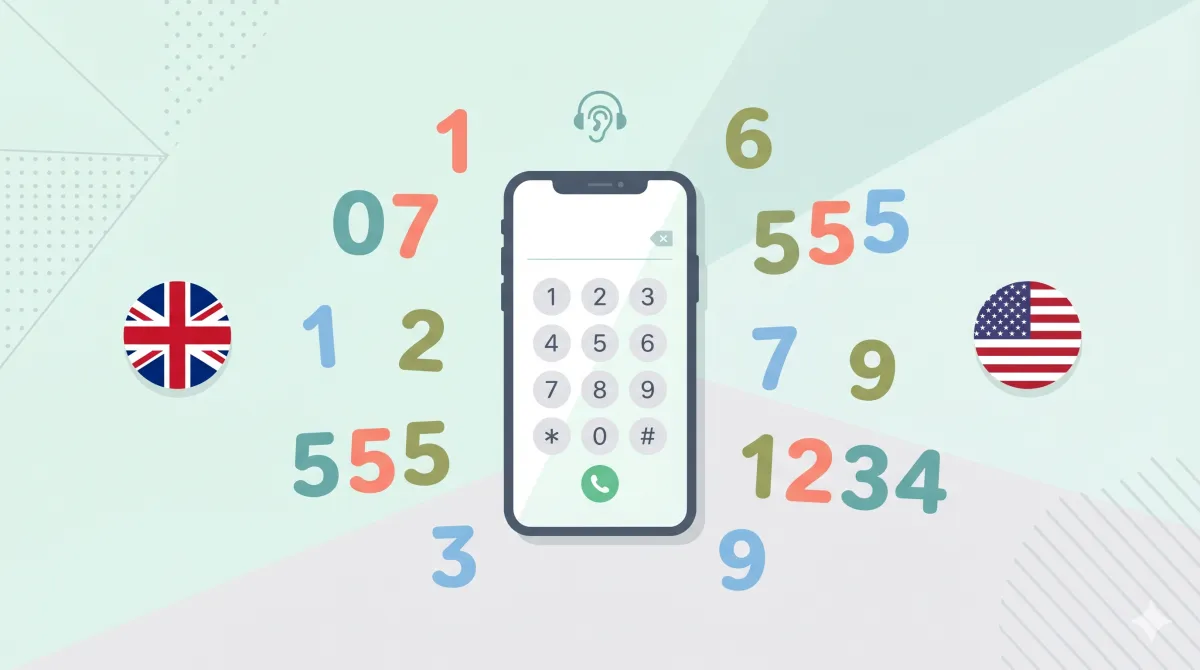
Phone Number Listening Practice in English
Train your ear on phone numbers spoken at natural speed — so you catch every digit the first time, without asking someone to repeat.
Taking a phone number in English under real conditions is harder than any textbook suggests. Ten to eleven digits fly past in a few seconds, the speaker switches between "oh" and "zero", throws in "double" or "triple", and groups the digits in ways you did not expect. Miss one digit and the whole number is wrong. This page is structured practice so you can lock it in.
Why phone numbers trip up even fluent listeners
Unlike a conversation, you cannot guess a phone number from context. You either catch each digit the first time, or you do not. Four specific challenges:
- Speed. Native speakers say phone numbers faster than almost any other kind of number, because the digits have no meaning on their own to slow them down.
- "Oh" vs "zero". British speakers usually say "oh"; Americans more often say "zero". In formal or technical contexts, both use "zero". You need to recognise both instantly.
- "Double" and "triple" chunks. "Double seven" means 77, not 7. "Triple four" means 444. Miss the signal word and you lose digits.
- Unfamiliar grouping. UK mobile numbers group differently from US numbers, and business numbers often break at unexpected points. Your ear has to follow the pauses, not force a pattern.
How to practise phone number listening
Generic listening apps don't isolate phone numbers — Numblr does. You hear a number read by a native speaker, you type what you heard, and the app scores you immediately. What we've built in specifically for phone numbers:
- British and American voices. Train on both accents, including "oh" vs "zero" and regional grouping patterns.
- "Double" and "triple" drills. The app deliberately mixes in repeated-digit patterns so you learn to expect the signal words.
- Mistake tracking. Every wrong answer is logged and the specific digit patterns you miss come back around later, until you close the gap.
- Adjustable speed. Start slow, build to real-world speed. Most learners start at 0.75× and reach 1× within two weeks.
Common phone number patterns to drill
| Pattern | Example | Spoken as |
|---|---|---|
| UK landline (London) | 020 7946 0958 | "oh two oh, seven nine four six, oh nine five eight" |
| UK mobile | 07700 900123 | "oh seven seven double oh, nine double oh, one two three" |
| US landline | (415) 555-0199 | "four one five, five five five, oh one nine nine" |
| US toll-free | 1-800-555-0123 | "one, eight hundred, five five five, oh one two three" |
| International prefix | +44 20 7946 0958 | "plus four four, two oh, seven nine four six..." |
Tips for live phone calls
- Write as you hear, not from memory. Never wait for the speaker to finish. You will forget the middle digits.
- Say "Can you repeat that, slowly?" — not "again". Native speakers will often just repeat at the same pace unless you explicitly ask for slower.
- Read it back. After you take the number, read it back digit by digit to confirm. This is the norm in English-speaking countries; no one finds it awkward.
- Practise daily, short sessions. Five minutes of phone number drills every day beats an hour once a week — listening memory decays fast.